Sleep trouble rarely announces itself as a yoga topic, but the last hour of the day decides much of the night, and for a lot of Cornelius adults that hour is a screen, a couch, and a mind still running the day's inventory at full speed. An evening practice built from deep stretch and slow breathing works on the problem from the body side: long-held, low-effort poses that release the day's physical accumulation, and breathing patterns that nudge the nervous system toward its night setting.
This is the shape of an evening class, including the candlelight version studios offer, and how to borrow its structure at home.
Why stretching before bed works
Muscles hold the day. Shoulders that rose during a tense meeting, hips set in chair-shape, a jaw clenched through traffic: by evening the body is physically braced, and bracing is the opposite of the state sleep starts from. Long-held stretches give that tension somewhere to go. Held for one to three minutes each, gentle poses let muscles release gradually rather than being forced, and the slow breathing that goes with them, exhale longer than inhale, is the oldest known signal for shifting the body toward rest. People often report that the practice does not make them sleepy so much as it removes the specific restlessness that was keeping them up.
- Dim and quiet first. Evening classes lower the lights for a reason. At home, do the same; bright light argues with the entire project.
- Start on the floor. Legs up the wall or a reclined stretch opens the session without any standing effort. Nothing in this practice should raise your heart rate.
- Work the day's storage spots. Hips, hamstrings, the front of the chest and shoulders, and the low back, each held gently for a minute or more per side.
- Twist slowly. Supine twists wring out the back and give the breathing something easy to follow.
- Slow the breath deliberately. Inhale for a count of four, exhale for six, for a few minutes. The extended exhale is the active ingredient.
- End lying still. Five minutes of doing nothing, covered with a blanket, is a formal part of the practice, not the absence of one.
- Keep the landing soft. No bright screens or news immediately after. The practice buys a state; spend the next twenty minutes not refunding it.
The candlelight version
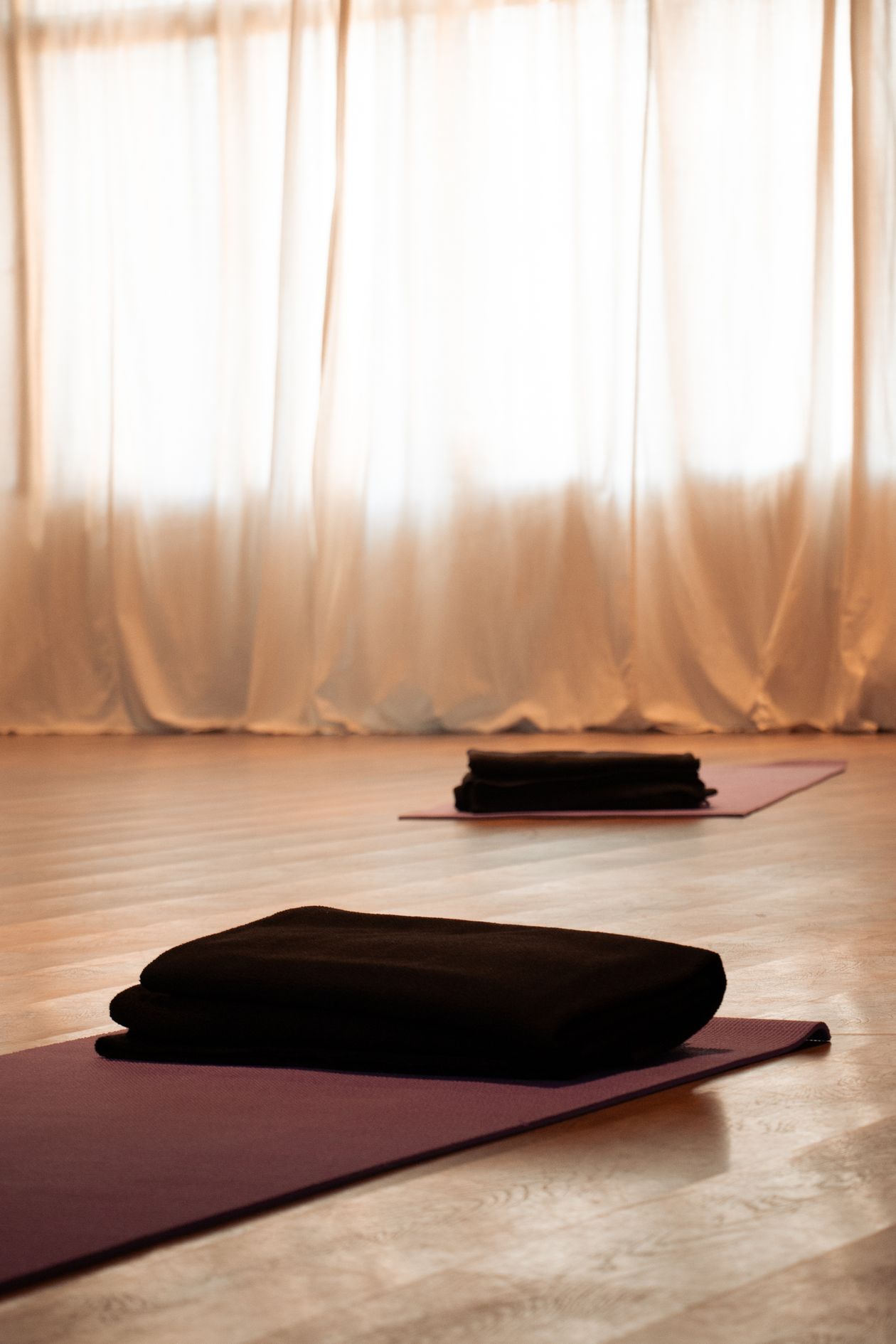
Studios run candlelight deep stretch classes as a scheduled wind-down, often on a weekday evening, structured to finish you rather than fire you up. Class descriptions promise a reset for body and mind and an easier path into sleep, and the format follows through: poses held longer, transitions slower, music low or absent, and a longer final rest than a daytime class allows. If your evenings are the problem, this is the class on a Cornelius schedule designed with your name on it. Wear the soft clothes. Some people, the descriptions cheerfully note, come nearly ready for bed, and nobody in the room finds that strange.
Borrowing it at home
Fifteen minutes is enough to matter. Pick four poses (a hip opener, a hamstring stretch, a chest opener over a folded blanket, a supine twist), set a gentle timer so you are not watching a clock, and hold each for about two unhurried minutes. The floor of a quiet room beats a mat in front of a television. Keep the same small sequence most nights; repetition is a feature here, since the body learns the ritual and starts downshifting at the first pose the way it learns any bedtime cue. Children and dogs both seem to recognize the signal quickly, for what that is worth.
What it is not
An evening practice is a sleep aid, not a sleep treatment. Snoring with pauses, insomnia that persists for months, or waking unrefreshed despite full nights in bed deserve a medical conversation, because some causes (apnea is the common one) are invisible to stretching. Also keep the timing sane: a vigorous class late at night energizes many people, which is why the evening tool is specifically the slow one. Use the strong styles earlier in the day and let the night belong to the floor, the blanket, and the long exhale.
Common questions
How close to bedtime should I practice?
Finishing 30 to 60 minutes before bed works well for most people: close enough that the calm carries, with time for the ordinary bedtime routine in between.
Will an evening class leave me too relaxed to drive home?
You will be calm, not impaired. Most people find the drive home quieter than usual. Give yourself a few minutes sitting up after the final rest before heading out.
What if my mind still races during the slow poses?
That is normal, especially early on. Follow the exhale count; attention anchored to counting wanders less. The skill being practiced is returning, not never leaving.
Photos in this guide are representative stock images.
← All guides from Community Yoga← Back to Community Yoga